From copilots to agents: how software development is changing in 2026
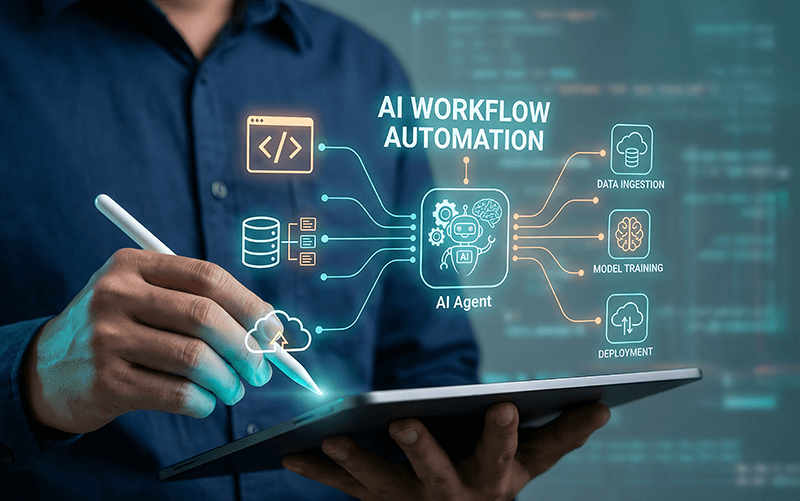
Software development has spent several years learning how to work with AI assistants that complete lines, explain functions, suggest tests and write small pieces of code. The next step is not simply that those assistants write code faster. It is that they can start working toward a complete objective: understand a repository, propose a plan, edit multiple files, run checks, interpret failures and continue toward a verifiable result.
That sounds like a small distinction in one sentence and a massive one inside a real project. A traditional copilot accelerates a human decision. An agent attempts to take responsibility for a sequence of decisions and actions. In 2026, that difference has become one of the most interesting changes in software engineering.
The important change is not code generation
Real engineering is more than typing code. Before a function can be written, someone has to locate the right part of the system, understand conventions, inspect dependencies, understand authentication and data flows, identify tests and decide what must not break.
The real value of an agent is therefore not lines per minute. It is the number of coordination steps a person no longer needs to perform manually.
OpenAI describes GPT-5.5 around complex goals, tool use, checking work and carrying more tasks through to completion. Anthropic has studied hundreds of thousands of Claude Code sessions and observed that people often make most planning decisions while the agent performs much of the execution.
That division is important because programming with AI stops looking like a conversation and starts looking like a workflow.
Copilot versus agent
A conventional copilot generally works next to the developer. You open a file, write a function, ask for an implementation and review the answer.
An agent receives a wider mission: add an authentication flow, preserve the current architecture, add validation, write tests and leave the build passing.
The difference is not sentence length. The second objective contains a chain of decisions.
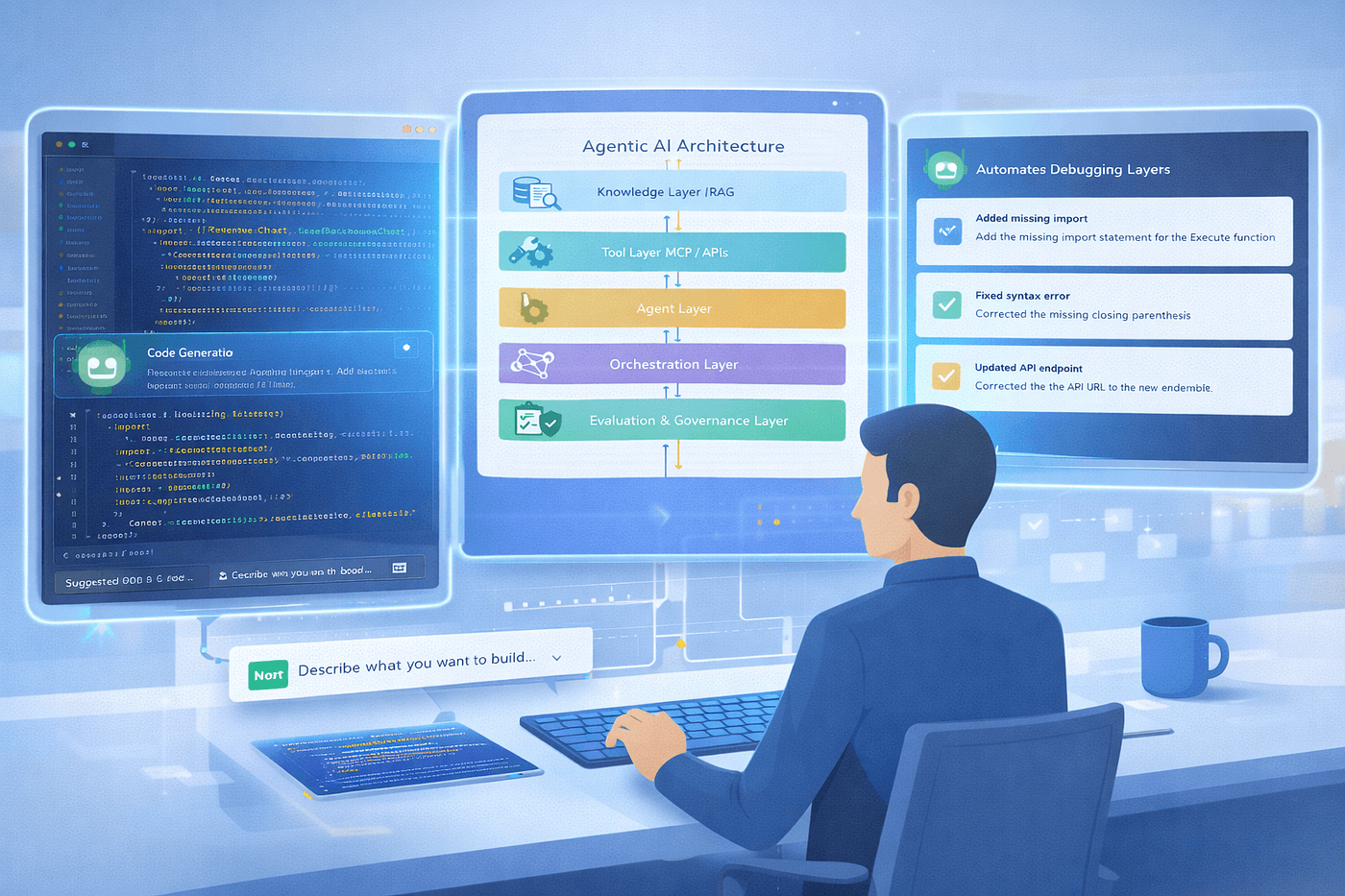
The agent must explore the system, decide what to change, execute the changes and use evidence from the environment to continue.
The repository becomes the interface
Tools such as Claude Code make the terminal and repository part of the interaction surface. Anthropic describes a workflow based on reading, planning, acting and observing, together with project instructions that help the agent understand a codebase.
This makes repository quality more important. A good project explains how it is run, where sensitive logic lives, which patterns are required, how migrations work and which checks must pass.
Documentation becomes infrastructure for both people and agents.
Verification becomes the language of trust
The right question is not “did the agent say it is done?” It is “what evidence proves that it is done?”
Does the project compile? Do tests pass? Did the intended route work? Did the agent modify only the required files? Did security checks pass?
Anthropic's research explicitly treats verifiable outcomes such as passing tests or completed committed work as important evidence of task success.
A reliable agentic workflow therefore ends with independent checks, not a confident final message.
Permissions matter more as capability grows
The more an agent can do, the more important permission boundaries become.
Reading code, editing project files, running local commands, reaching external services and touching production should not all have the same level of authorization.
Anthropic has written about approval fatigue and the trade-offs between constant prompts, sandboxing and unrestricted execution.
The goal is not to distrust AI. It is to make the blast radius explicit.
Expertise does not disappear
One of the most interesting findings from Anthropic's work is that domain expertise still matters. More experienced users tended to get more work done per instruction.
That suggests an important future: agents may amplify expertise rather than erase it.
The developer's job changes from writing every mechanical change to reviewing architecture, defining constraints, designing systems and judging outcomes.
A practical workflow
A strong process is simple:
- Understand the system.
- Plan the change.
- Execute the smallest necessary set of edits.
- Run lint, type checks and tests.
- Inspect the diff.
- Validate the real product.
- Document what the next cycle needs to know.
This looks slower than unrestricted automation, but it scales because it makes errors observable.
Where agents are strong
Clear, reversible and objectively verifiable tasks are particularly suitable: refactors with tests, new routes, repetitive component work, test generation, documentation and bug fixes with reproducible failures.
Ambiguous product decisions, destructive migrations, secrets, authentication and irreversible production changes deserve stronger human control.
The unit of work is moving from the file to the task
The clearest way to understand 2026 is that the unit of work for AI coding is shifting from the file to the task.
We are no longer limited to asking “write this function”. We can ask the system to understand an objective, inspect a repository, execute a strategy and provide evidence.
The competitive advantage will not simply come from access to a powerful model. It will come from the engineering process around it: clear constraints, safe permissions, good tests and independent verification.
Start with a small reversible task
You do not need to wait for a perfect agent. You need a process that can detect when the agent is wrong.
Before using one on a real repository, make sure the project is reproducible, its rules are documented, its secrets are isolated and important changes leave a reviewable trail.
Sources
- OpenAI — Introducing GPT-5.5
- OpenAI — GPT-5.6
- Anthropic — Agentic coding and persistent returns to expertise
- Anthropic — Claude Code: Foundations
- Anthropic — Auto mode
When the agent works in a large repository
Repository size changes the problem. In a small project, a person can hold much of the system in their head. In a large one, even an experienced engineer has to navigate modules, services and configuration constantly. An agent can therefore explore the tree much faster than a human trying to remember where everything lives.
But fast exploration is not perfect understanding. An agent may find fifty relevant files and still miss why an architectural decision was made two years ago. In larger repositories, project history matters almost as much as source code.
Commits, documentation, tests and repeated patterns become signals. An agent that finds several consistent implementations has a better clue than one given an isolated description.
A good repository explains intent
There is a huge difference between “here is a function” and “this function exists for this reason and must not be used outside this context”.
The most useful comments for agents are not comments that restate code. They explain decisions, constraints and exceptions.
Tests also communicate behavior. A test showing that an unauthorized user receives an error expresses a system rule more strongly than a paragraph in documentation.
The agent as a research partner
Value does not have to mean execution. Agents are also strong at investigating technical problems.
They can trace a request from UI to database, compare implementations, find related dependencies or identify every route using a given function.
That lowers the cost of entering an unfamiliar part of a system.
The key is to separate investigation from modification: discover first, decide second, change third.
The new bottleneck: reviewing the result
As generation becomes faster, review can become the bottleneck.
A five-minute generated change that takes thirty minutes to review does not automatically reduce total cost.
That creates demand for stronger automated tests, static analysis, previews, visual checks and specialized code-review agents.
Future engineering is therefore not generation alone. It is generation plus verification.
A practical rule for deciding what to delegate
Score a task using four questions:
Is it reversible?
Does it have a clear definition of done?
Is there an automated or easily observable test?
Is the impact of failure limited?
The more “yes” answers, the better the task is for an agent.
A task that fails all four should begin with much stronger supervision.
Specialized agents versus one giant agent
Another interesting direction is task decomposition.
One agent can implement, another can test, another can document and another can review security or consistency. They do not all need identical capabilities.
The benefit is that each stage can have a different definition of success.
The implementation agent tries to complete the change.
The testing agent tries to break it.
The review agent tries to challenge decisions.
A human owner coordinates and decides.
That looks more like an engineering team than a magic tool.
What should change in development teams?
Meetings do not disappear because AI exists. Their content can change.
Instead of spending an hour discussing how to implement a mechanical task, a team can focus on constraints, interfaces, metrics and risks. The agent executes part of the plan and returns evidence.
Technical conversation shifts from “how do we type every line?” toward “what must be true when we are finished?”.
That is a profound change because it moves engineering toward verifiable system design.
Real productivity is not automatic
It is tempting to assume that more AI capability automatically means more productivity. It does not always.
A team can generate more code while accumulating more debt, open more pull requests while increasing review time, or close more tickets while causing more regressions.
Measure end-to-end outcomes instead.
The goal is not maximum activity. It is sustainable value delivered.
The principle likely to survive every model generation
Tools will change. Models will improve. Agents will gain more context and more ability to act.
Four principles should remain useful: understand the objective before acting, limit permissions, verify results and keep humans in charge of irreversible decisions.
That combination captures the speed without turning speed into uncontrolled risk.
Extended closing
The best picture of a coding agent in 2026 is not a robot replacing the developer at the keyboard. It is an execution layer capable of absorbing a meaningful amount of mechanical and coordination work while the human retains the system view.
When an agent can explore, edit, test and correct, the developer becomes not only a code producer but also the director of an automated engineering process.
That requires new skills: writing strong objectives, defining boundaries, designing checks, reading diffs quickly and recognizing which decisions should never be delegated.
The paradox is useful: as AI gets better at execution, knowing what to ask for and how to prove it worked becomes more important.
Structuring a task for an agent
Vague requests tend to produce vague solutions. A well-scoped request acts like a small specification.
Instead of saying “improve the dashboard”, describe what should change, what must remain untouched, which routes are affected and which checks must pass. This reduces ambiguity and gives the agent an observable target.
A useful task can contain five pieces: context, objective, constraints, acceptance criteria and tests. Context explains where we are. The objective explains the desired result. Constraints define what must not be changed. Acceptance criteria describe success. Tests turn success into evidence.
A realistic example
Context: Next.js application with authentication and Supabase.
Objective: add a sanction-history screen for moderators.
Constraints: do not expose the administrative panel and keep the system bilingual.
Acceptance: moderators can review history, normal members are redirected, and lint/build pass.
Verification: check both routes and run the project's validation commands.
The agent now has a much clearer decision space.
Project memory matters
An agent can return to the same repository repeatedly, so documenting decisions that should not be rediscovered becomes valuable.
What a moderator role means. Which table represents a sanction. Which endpoint is canonical. Which internationalization pattern the application uses. Which commands are mandatory before work is considered complete.
This memory does not need to be sophisticated. A small set of current, readable project files can be enough.
Human review changes scale
When an agent produces larger changes, line-by-line review is no longer a sufficient first strategy. Start by reviewing the shape of the change.
How many files changed? Was a migration introduced? Did authentication move? Did dependencies change? Were permissions affected? Are there new routes?
Then go deep into sensitive areas.
That lets one person review more work without pretending every line has identical risk.
A small measurement system
Track four things: implementation time, review time, regressions and the percentage of tasks that must be redone.
If implementation drops from an hour to ten minutes while review grows from twenty minutes to fifty, the process is not necessarily better.
If agents make larger changes while regressions stay flat, the additional speed may be valuable. If regressions rise, more controls are needed.
Measurement prevents the feeling of speed from being confused with real productivity.
What happens to the IDE?
Editors will remain useful, but the interaction unit may change. Instead of spending the entire day jumping from file to file, developers may alternate between architectural views, agent conversations and result review.
The keyboard does not disappear. Its relationship with the system changes.
The editor becomes a window into an environment where multiple tasks can progress in parallel.
The agent is not the product
It is easy to become fascinated by a particular tool. For a company, however, the durable asset is not a specific agent. It is the process built around it.
Vendors can change models, prices and interfaces. The underlying discipline should remain: context, boundaries, tools, verification and accountability.
That makes it possible to replace one tool with another without rebuilding the engineering process from scratch.
A near-future workflow
Imagine opening a ticket in the morning. An agent explores the repository, locates relevant routes and prepares a plan. While you review architecture, another process generates tests. The implementation agent executes the change and runs checks. A second agent reviews the diff for regressions. You receive a proposal with evidence and decide whether to merge it.
That still requires supervision. But supervision no longer means manually typing every change.
The skill that gains value: defining evaluation
In an agentic future, knowing what “done” means becomes a high-value engineering skill.
Good acceptance criteria become productivity infrastructure because they let automation move without waiting for a human instruction every few minutes.
Teams should therefore invest in tests, observability and documentation as seriously as they invest in models.
The next frontier
The natural evolution is from agents working on code to agents working across the product lifecycle: analyzing incidents, preparing changes, testing, documenting, observing deployments and learning from outcomes.
The challenge will not only be better models. It will be building a tool architecture where each capability has clear limits and the result remains auditable.
That points toward hybrid engineering: humans define objectives and accountability; agents execute and explore; automated systems verify; production remains protected by policy.
What an agent should ask before editing
A mature workflow does not treat every request as a command to execute immediately. Some tasks need clarification because the repository itself contains conflicting signals. An agent should be encouraged to identify ambiguity instead of inventing a policy.
For example, suppose a project contains two different approaches for authentication. The newest file may not be the canonical one. The safest behavior is to surface the inconsistency, inspect tests and documentation, and ask for a decision when the evidence is insufficient.
This is one of the biggest differences between useful autonomy and uncontrolled autonomy: knowing when not to guess.
Repository archaeology becomes a real engineering skill
Large codebases contain history. Old migrations explain current database shape. Deprecated helpers explain why apparently simple abstractions exist. A bug report can make sense only after looking at a sequence of changes rather than one file.
Agents can accelerate this archaeology by searching broadly and connecting references, but humans still need to decide which historical constraints remain valid.
A practical pattern is to ask for a “why” summary before a “how” plan: why does this component exist, what assumptions does it encode, and which consumers depend on it?
That extra step prevents technically elegant rewrites that accidentally remove invisible contracts.
Tests become executable documentation
A test suite is more than a safety net. It is a machine-readable statement of what the project considers important.
When agents are involved, this becomes even more valuable. A good test can prevent an agent from drifting away from the intended behavior while still allowing it freedom to choose the implementation.
This suggests an important investment: write tests around outcomes rather than internal implementation details whenever possible.
If the requirement is “a moderator can suspend a member for up to seven days”, the strongest test expresses that outcome. The agent can then change components without breaking the underlying rule.
UI validation becomes part of the loop
Web applications expose a problem that compile checks cannot catch: a page may be technically correct and still feel broken.
Buttons can be hidden below a fold. Dialogs can overflow on mobile. A translation can be missing. A loading state can leave the interface apparently frozen.
That is why real product validation should include the browser, screenshots or equivalent visual checks when the interface matters.
The agentic loop becomes richer when the system can inspect its own output as a user would see it.
Security should be adversarial
A dangerous mistake is asking only whether the agent's change works. Security review should also ask how the change can fail under hostile input.
Can a normal user call an administrative endpoint directly? Can a malformed identifier access another user's resource? Can a prompt manipulate a connected tool? Can a new route bypass existing middleware?
A second review pass with an explicitly adversarial goal can find classes of issues that a happy-path implementation pass will miss.
Agents and production environments
The closer an agent gets to production, the more important staged environments become.
A good progression is development, preview, staging and production, with progressively stronger permissions and checks. The agent should be able to demonstrate behavior in a low-risk environment before any production authority is considered.
This is not unique to AI. It is the same principle used for any automation capable of changing live systems.
The economics of context
There is also a hidden cost to agentic work: context.
An agent that spends significant effort rediscovering project structure on every task is less efficient than one supported by concise, durable instructions. This is another reason why good repository documentation pays for itself.
The best context is not the largest context. It is the most relevant context.
A compact architecture overview, clear conventions and targeted tests can outperform a huge collection of generic notes.
Parallel work creates coordination problems
When multiple agents can work at the same time, a new class of failure appears: overlapping changes.
Two agents may edit the same component in incompatible ways. One may update a database contract while another assumes the old contract. One may remove a helper while another is still using it.
Parallel execution therefore needs ownership boundaries: one agent owns a task, changes are isolated where possible, and integration happens through explicit review.
More agents do not automatically mean more throughput.
The best workflow is partly boring
This may sound strange in a discussion about cutting-edge AI, but mature agentic engineering is repetitive in the best possible way.
Plan. Change. Test. Review. Repeat.
Boring processes are easier to automate, easier to audit and easier to recover when something goes wrong.
The interesting part is that the machine performs more of the repetition while humans concentrate on the decisions that are genuinely difficult.
A useful division of authority
A team can define authority in three levels.
Agent authority: inspect code, edit scoped files, run safe checks.
Reviewer authority: approve changes, adjust scope, reject incorrect approaches.
Production authority: deploy or modify live systems only through a protected path.
This model makes it possible to grant significant autonomy without giving the same identity unlimited power.
The strategic question for 2026
The important question is no longer whether agents will become capable enough to write software. That trend is already visible across modern coding tools and model providers.
The strategic question is which organizations will build the best systems around that capability.
A company with clean repositories, excellent tests, clear permissions and strong observability can benefit from better models much faster than a company with the same model and a chaotic engineering process.
The model is only one component.
Final checklist
Before delegating a substantial software task to an agent, define the objective, list constraints, identify the affected systems, prepare acceptance criteria, isolate secrets, limit tools and decide what evidence must exist before approval.
After the agent finishes, review the diff, run the checks, validate the real interface and confirm that the change stayed inside scope.
That process may look less futuristic than “one prompt builds the app”. In practice, it is much more useful.
The future of software engineering is unlikely to be humans versus agents. It is more likely to be humans designing systems in which agents can safely do more.
A final operating model for teams
The most sustainable approach is not to make every developer supervise every agent all the time. Instead, define predictable boundaries. Routine changes can move through automated checks. Sensitive changes require explicit review. Production actions remain behind a protected approval path.
That structure turns autonomy into something measurable. Teams can gradually widen an agent's scope when evidence shows that additional freedom does not increase regressions or security incidents.
The result is a feedback loop: start small, measure, improve the checks, then expand.
A useful organization can maintain a catalogue of task types. For each type, define which tools are allowed, which tests are mandatory and which human approval is required. Over time, this becomes a reusable operating system for AI-assisted engineering.
The deeper lesson
The exciting part of agentic coding is not that a machine can produce a surprising amount of code. It is that software engineering can become a more explicit system of objectives, constraints, actions and evidence.
That is good engineering practice even without AI.
Agents simply make the value of that discipline much more visible.
The teams that adapt fastest will probably not be the teams that remove every human checkpoint. They will be the teams that decide exactly which checkpoints matter and automate everything around them.
Beyond the checklist: continuous governance
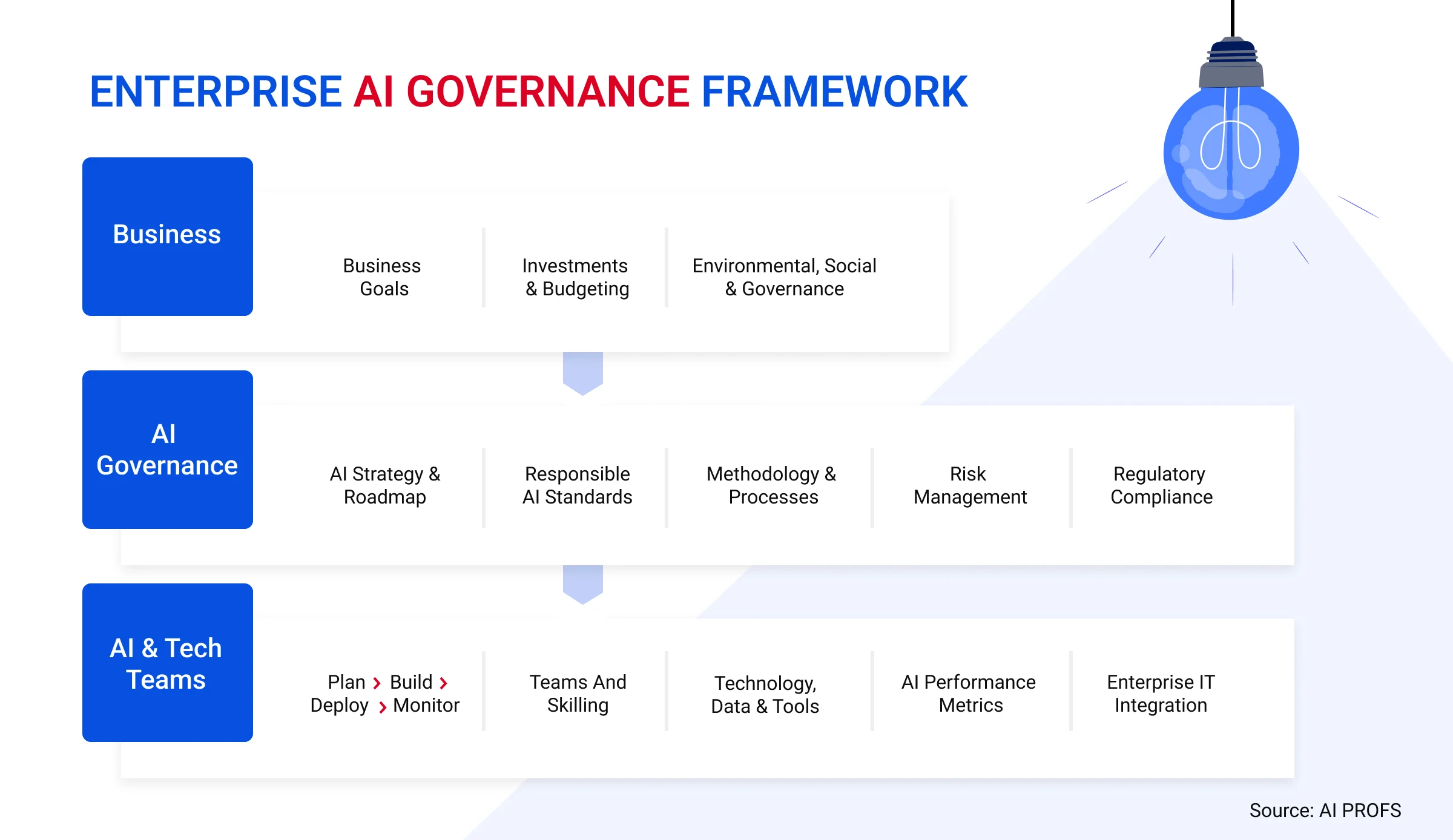
A mature organization treats AI governance as a living system rather than a document that is written once. New vendors appear, models change, features are added to existing products and teams discover new uses that were not in the original inventory.
That means an AI register should have an owner, a review cadence and a mechanism for recording changes. A system should be reclassified when its purpose changes, not only when its code changes.
Imagine a support chatbot that initially answers public questions. Six months later, someone connects it to customer accounts so it can inspect orders. The interface may look almost identical, but the risk profile has changed materially. The inventory should reflect that evolution.
The difference between capability and authorization
A useful architectural principle is to separate what a model is capable of doing from what the application authorizes it to do.
A model may be able to generate SQL, call tools or infer sensitive information. That does not mean the product should grant it those capabilities. Tools should expose only the operations necessary for the use case, and the backend should verify authorization independently.
This principle becomes especially important as agents grow more autonomous. More capability makes least privilege more important, not less.
Build an audit trail that people can understand
Logs are valuable only when someone can reconstruct what happened. A useful record can include the time, system version, actor, request context, tools invoked, approval decision and outcome, subject to applicable privacy requirements.
The goal is not to record every token a model generated forever. The goal is to retain enough evidence to investigate meaningful incidents and understand important automated actions.
A clear audit trail is also useful for engineering teams because it makes debugging easier.
Separate experimentation from production
AI development benefits from a safe place to experiment. Teams should be able to try new models, prompts and tool integrations without immediately exposing production data or production authority.
A sandbox with synthetic or minimized data can make experimentation faster because the team knows the consequences are limited.
Promotion to production should be a deliberate step with its own checks.
Evaluate the whole system, not just the model
A common mistake is to benchmark only model quality. In a real product, the model is one component among retrieval, tools, permissions, prompts, business rules and user interface.
Evaluation should therefore include the full workflow.
Does the system answer correctly? Does it refuse unauthorized requests? Does it select the right tool? Does it recover from tool failures? Does it preserve data boundaries? Does the UI communicate uncertainty?
A perfect benchmark score for the model cannot compensate for an unsafe integration.
The practical north star
The most useful question for an organization is simple: can we increase automation while keeping the behavior understandable and controllable?
When the answer is yes, expand the system gradually.
When the answer is no, improve the architecture before adding more autonomy.
That principle works across coding agents, customer assistants, workflow automation and internal AI tools.
Final takeaway
Agentic software development is not just a story about better models. It is a story about changing the unit of engineering from individual edits toward complete, verifiable tasks.
The opportunity is enormous, but the winning approach is disciplined: clear objectives, durable project context, limited permissions, independent verification, staged environments and human authority over irreversible decisions.
As agents become more capable, those practices become the foundation that lets organizations use them at greater scale.
FMCP / MEDIA